

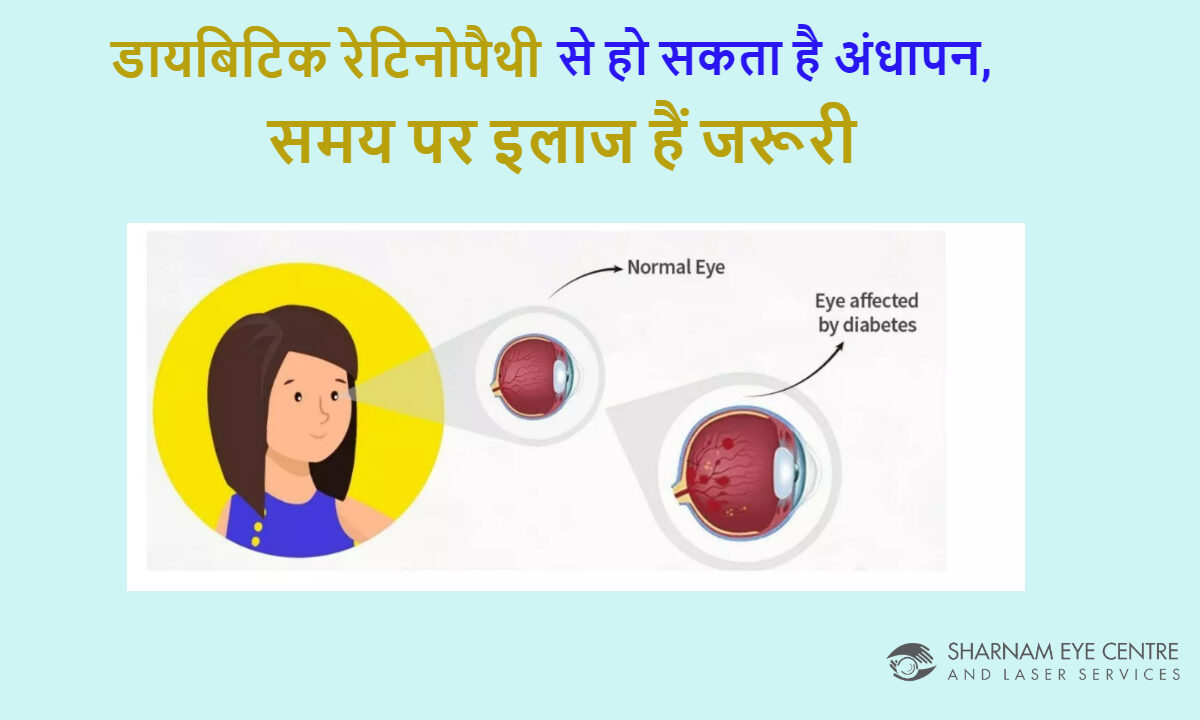
डायबिटिक रेटिनोपैथी से हो सकता है अंधापन, समय पर इलाज हैं जरूरी

डायबिटिक रेटिनोपैथी क्या है?

डायबिटिक रेटिनोपैथी (Diabetic Retinopathy) आँखों की एक समस्या है जो मधुमेह (diabetes) के रोगियों में होती है। यह रेटिना नामक तंत्र को प्रभावित करती है, जो आँख की पीछे के हिस्से में स्थित होता है। डायबिटिक रेटिनोपैथी के कारण, रेटिना के अंदर रक्त का रिसाव तथा सूजन होती है, जो अंततः दृष्टि को प्रभावित करता है। जो लोग लम्बे समय से डायबिटीज के मरीज है, उनमें डायबिटिक रेटिनोपैथी होने की आशंका बहुत ज्यादा होती है। आपको ये जानकर हैरानी होगी कि डायबिटिक रेटिनोपैथी (Diabetic retinopathy) मौजूदा समय में दुनिया में अंधेपन का सबसे प्रमुख कारण है। अगर इसका समय पर इलाज न कराया जाए तो व्यक्ति अंधा भी हो सकता है।

डायबिटिक रेटिनोपैथी के लक्षण क्या हैं?

डायबिटिक रेटिनोपैथी के शुरूआती लक्षणों की बात करें तो – आँखों के सामने तैरते धब्बे नज़र आना, धुंधला दिखाई देना, टेढ़ा-मेढ़ा दिखना , चश्मे के नंबर में बार-बार परिवर्तन होना , आंखों की रोशनी अचानक कम होना, रात में देखने में कठिनाई आना, रंग भेद करने में कठिनाई आना इत्यादि इसके प्रमुख लक्षणों में शामिल हैं।

डायबिटिक रेटिनोपैथी का कारण क्या है?

रेटिना को रक्त पहुंचाने वाली महीन नलिकाओं का क्षतिग्रस्त होना ही डायबिटिक रेटिनोपैथी का मुख्य कारण होता है। उच्च रक्त शर्करा के स्तर के कारण, वाहिकाएं कमजोर हो जाती हैं, क्षतिग्रस्त हो जाती हैं। स्वस्थ रेटिना धीरे-धीरे सभी छोटी रक्त वाहिकाओं को खोने लगती है जिसके परिणामस्वरूप रेटिना कमजोर हो जाती है।

डायबिटिक रेटिनोपैथी से कैसे बचें ?

मधुमेह रोगी यदि उचित देखभाल करें तो निश्चित रूप से डायबिटिक रेटिनोपैथी जैसी समस्या से बच सकते हैं।

• आंखों के पर्दे की जांच समय-समय पर किसी रेटिना विशेषज्ञ से कराते रहें।
• यदि आप पांच साल से डायबिटिक हैं तो हर ६ माह आँखों की जांच कराएं।
• ब्लड शुगर का नियंत्रण, लिपिड प्रोफाइल की जांच जरूरी है।
• हाई ब्लड प्रेशर व कोलेस्ट्रॉल नियंत्रण रखना भी जरूरी है।
• धूम्रपान जैसे व्यसनों से बचें।
• नियमित रूप से व्यायाम करें।

डायबिटिक रेटिनोपैथी का इलाज क्या है ?

डायबिटिक रेटिनोपैथी के उपचार के विकल्पों में रेटिनल लेजर फोटोकोगुलेशन और विट्रोक्टोमी सर्जरी शामिल हैं।

लेज़र फोटोकॉएग्यूलेशन: यह एक लेजर तकनीक पर आधारित नेत्र चिकित्सा है जिसमें लेज़र से उष्मा का उपयोग रेटिना में असामान्य रक्त वाहिकाओं को सिकोड़ने या नष्ट करने के लिए किया जाता है। इस उपचार से रक्त संचार में सुधार होता है और रेटिना को नुकसान से बचाया जा सकता है। इसका उपयोग आमतौर पर विशेषज्ञों द्वारा डायबिटिक रेटिनोपैथी और मैक्यूलर डिजनरेशन (एएमडी) जैसी आँखों की बीमारियों के इलाज में किया जाता है, जिसमें रेटिनल टियर, मैकुलर एडिमा और रेटिनल वेन ऑक्लूजन शामिल हैं।

एंटी वीईजीएफ़ इंजेक्शन: Anti-VEGF Injection (Accentrix/Razumab/Eylea/Ozurdex) परदे (Retina) की सतह पर इंजेक्ट करना डायबिटिक रेटिनोपैथी के असर को नियंत्रित करने में काफी हद तक सहायक होता हैं।

विट्रोरेटिनल आई सर्जरी (Vitreoretinal Eye Surgery): अगर रेटिनोपैथी की समस्या काफी बढ़ जाए जिससे उसका इलाज लेजर विधि से संभव ना हो तो उस अवस्था में सर्जरी के जरिए रक्त कोशिकाओं (ब्लड सेल्स) या धब्बों को निकाला जाता है।

डायबिटिक रेटिनोपैथी की समस्या टाइप-1 या टाइप-2 डायबिटीज से पीड़ित किसी भी मरीज को हो सकती है. जितने लंबे समय से आपको डायबिटीज है उतना ही इसका खतरा बढ़ता जाता है. इसलिए, यदि आपको डायबिटीज की समस्या है और आपको किसी भी तरह के आंखों की समस्या का संकेत मिल रहा है, तो आपको तुरंत अपने रेटिना विशेषज्ञ से मिलना चाहिए और बिना देरी किये डायबिटिक रेटिनोपैथी का उपचार कराना चाहिए।

Disclaimer: This content is for informational purposes only and should not replace professional medical advice, diagnosis, or treatment.

Early Detection of Diabetic Retinal Changes

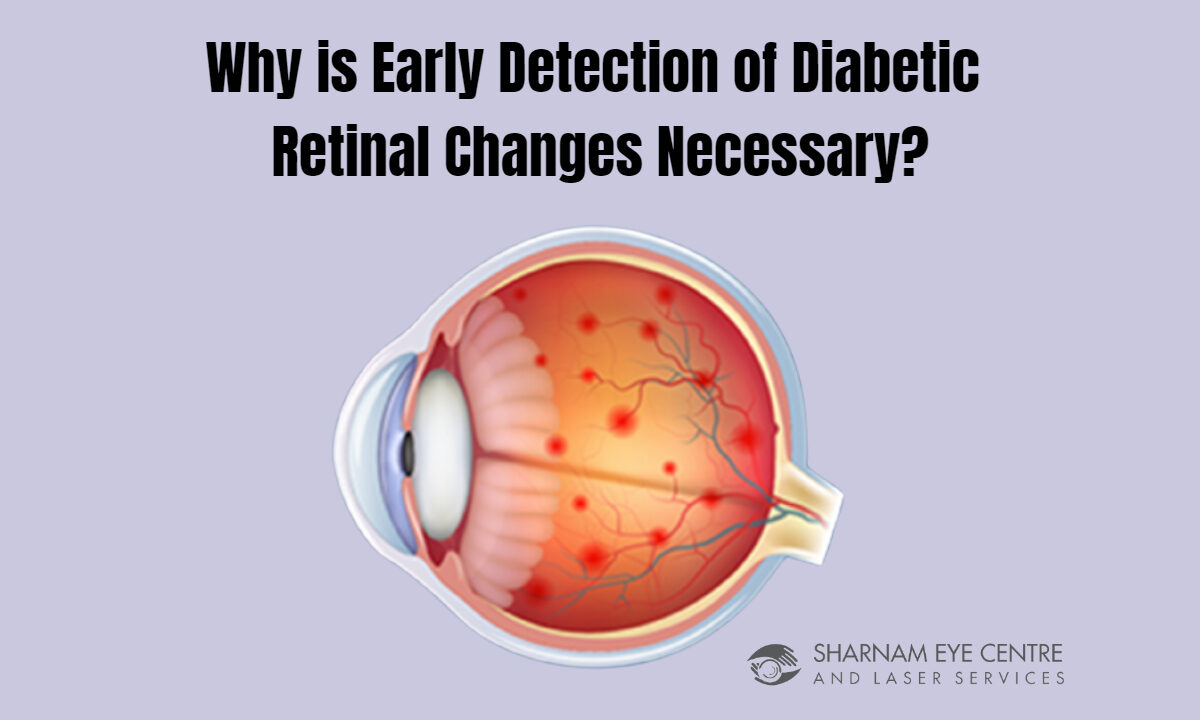
Why is Early Detection of Diabetic Retinal Changes Necessary?

Diabetics have an amplified risk of developing eye problems which, if left untreated, can result in deprived vision and sightlessness. However, 98% of serious vision damage from diabetes can be halted with regular eye examinations and timely treatment. 

How Does Diabetes Affect Your Eyes? 

High blood glucose levels can cause variations in the contour of the lens which can distort your vision. This can occur before diabetes is detected or isn’t being treated. The distortion generally vanishes when blood glucose levels are reduced via suitable treatment. Therefore, getting new spectacles should be postponed until blood glucose levels are back within the suggested range. High blood glucose levels for lengthy periods of time can increase the risk of more serious eye difficulties in individuals with diabetes, including: 

✔ Diabetic Retinopathy 

✔ Macular edema 

✔ Glaucoma 

✔ Cataracts 

Most diabetics undervalue the fact that diabetes can influence eyesight because they do not observe changes in their vision until the situation is very dire. Few diabetic patients get the luxury of initial cautionary signs. Often, the damage to the eye is done before the presentation of any symptoms. Hence, it is necessary to have regular eye check-ups so that complications can be detected early and treated quickly. 

Why is early detection of diabetic retinal changes necessary?

Diabetic retinopathy is one of the leading reasons of avoidable blindness in working-aged adults. Risk elements for visually substantial diabetic retinopathy consist of duration of disease, poor glycemic control, and hypertension. 

The American Diabetes Association suggests preliminary eye examinations for patients with diabetes as follows: 

● For Type 1 Diabetes- first dilated exam within 5 years of beginning of diabetes;

● For Type 2 Diabetes- first dilated exam at time of analysis; and 

● For pregnant people with diabetes- a screening checkup before or during the first trimester.

Regrettably, studies show that the rate of diabetic eye exams continues to be low. Timely detection of diabetic retinopathy is imperative for quick treatment and optimum visual outcomes. In the case of subclinical diabetic retinopathy, neural retinal damage and microvascular changes might occur but be asymptomatic to patients. At the point of noticeable funduscopic diabetic variations, microvascular changes might have already resulted in irreparable structural impairment. 

Improvements in imaging technology have provided ophthalmologists with adjunctive analytical tools to better assess for the manifestation and degree of diabetic retinopathy. Simple color fundus photography is important in emphasizing discoveries that might have been overlooked on slit lamp or incidental ophthalmoscopy examination. Non-invasive optical coherence tomography (OCT) is a very useful diagnostic tool to know what is happening in the layers of the retina of diabetic patients. 

Diabetic retinopathy is a very serious impediment resulting from diabetes. Virtually all diabetic patients will show some retinal vicissitudes at some point in their lives. It is presently suggested that type 1 diabetics begin yearly eye exams 3-5 years post diagnosis. Patients with type 2 diabetes should have annual eye exams beginning the same year as their analysis. Well-timed diagnosis of diabetic retinopathy is necessary as the significance of early treatment has become progressively obvious. Remember, your sight is very valuable. Take the time out for a comprehensive annual eye exam to make sure that you preserve this valuable resource for many years to come.

Disclaimer: This content is for informational purposes only and should not replace professional medical advice, diagnosis, or treatment.

What is Diabetic retinopathy ?

This is a small patient education video in hindi about Diabetic Retinopathy. Dr Puneet Gupta ,Retina Specialist, Ghaziabad is explaining how the retina is damaged and the vision is affected in this serious eye disease.There two reasons of vision loss , first is diabetic macular edema or diabetic maculopathy and the second is proliferative diabetic retinopathy. Vitreous haemorrhage and retinal detachment occurring in advanced stages may cause serious vision loss .This severe vision threatening condition can be prevented by timely detection and treatment. A paid animation from American Academy of Ophthalmology has been used to create a part of this video.

Sharnam Eye Centre & Laser Services was started 25 years ago as a specialised centre for the treatment of retinal diseases in Ghaziabad. Our new venture– ‘Sharnam Mobile Retina Eye Clinic’ is a novel concept which will provide diagnostic facilities for the detection of diabetic retinopathy at the doorsteps of diabetic patients.

Appointment
close slider

For Appointment-

Online Appointment: Available between 8 AM to 8 PM (Except Saturday)

Book An Online Appointment - Click Here

Call for Appointment -

9818851925,

9810979457,

8586030104

-----------------------------------------